

Skip to content
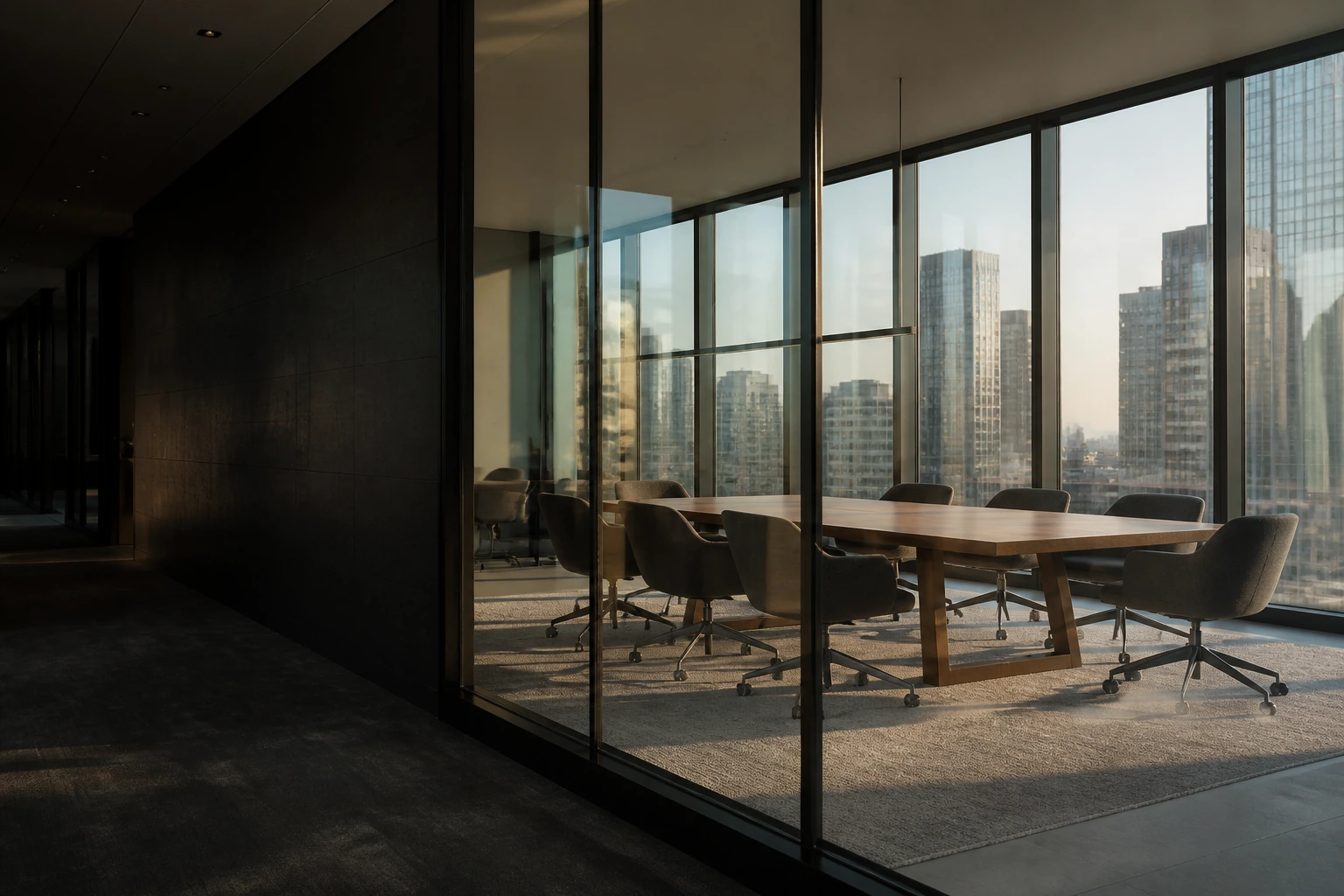
A glazed meeting room with solar-control windows overlooking a city skyline

Commercial window film · Pinellas Park, Florida

Commercial window tinting in Pinellas Park, FL

Offices, warehouses, storefronts. Film is the only glass upgrade that costs a fraction of new windows, goes in after everybody has gone home, and shows up on the next cooling bill.

78%
Of the sun’s heat blocked
15%
Off the cooling bill
33 mo
Typical payback
0 days
Closed for the work

Heat and glare at work

Why rooms by the windows get too hot

Nobody complains about a building. They complain about a desk. On bare glass the sun cooks the desks nearest the window and the heat works its way back across the floor, so the whole floor runs warm and the window row runs hot. Turn the film on and watch every desk cool down, from the glass to the elevators.

A laptop on a desk pushed up against a bright floor-to-ceiling window
Bare glassJuly, mid-afternoon

12°F

between the desks at the window and the desks by the elevators. Same floor.

Window row
84°F
By the elevators
72°F
Cooling bill
As it is now

Film stops most of the sun’s heat at the glass before it gets into the room, so every desk cools down, the window row most of all, and the cooling plant does less work. On a floor like this that is about fifteen percent off the cooling bill.

Every kind of commercial glass

Window film for every kind of building

Everybody calls asking for window tinting. What an office needs isn’t what a warehouse needs, and neither of them is what a clinic needs. Pick the building you actually run.

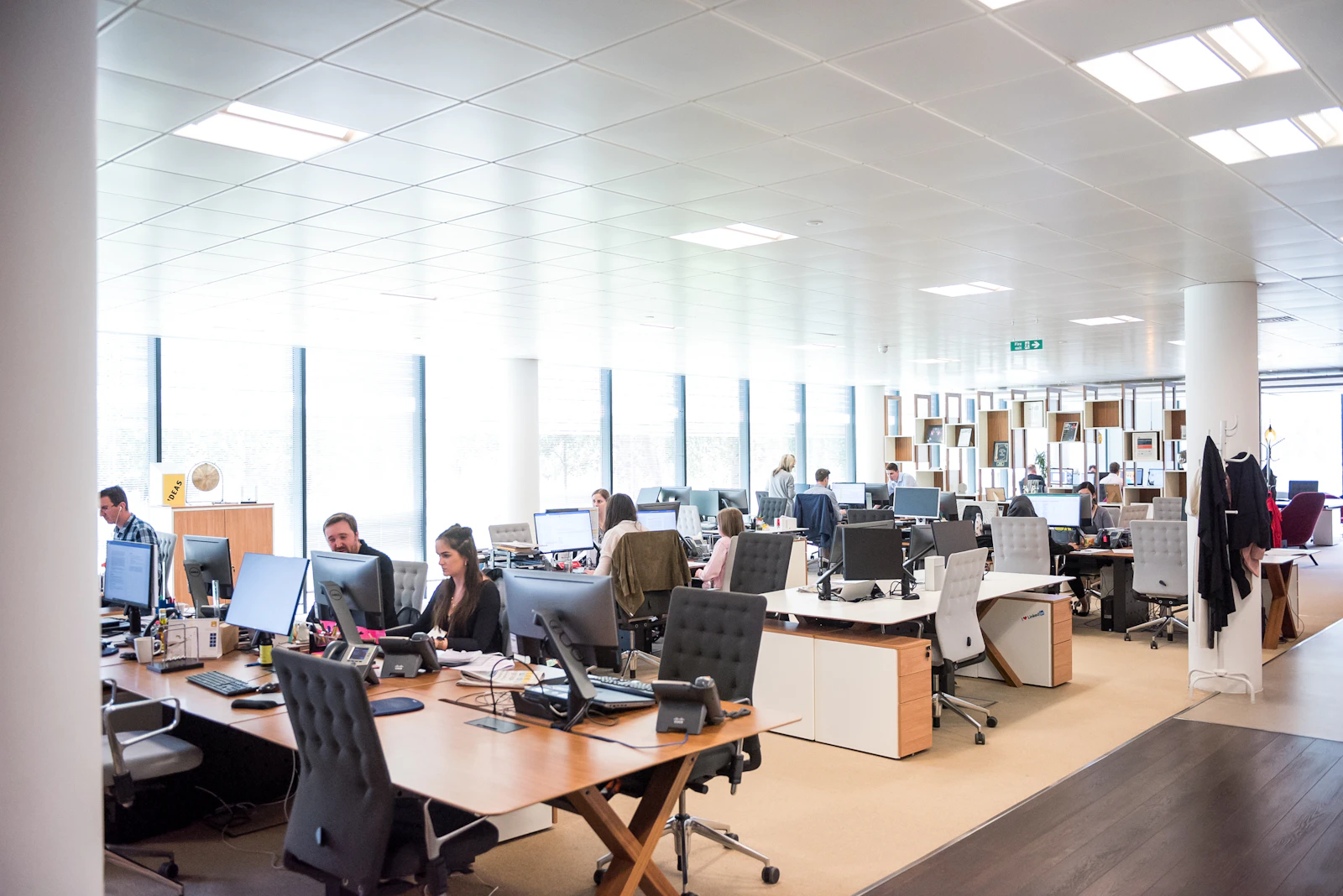
An open-plan office with desks running back from a full-height window wall

78% heat · 87% glare

OfficesHeat and glare at the windows

Desks by the windows that are too hot to use

The sun lands on the desks by the windows, the thermostat comes down to fix it, and everybody past the second row brings a sweater. Film evens the floor out so the thermostat can go back up — which is the part that shows up on the bill rather than in the complaints inbox.

What we would specify

A barely-there solar film that keeps the view and the daylight exactly as they were.

Landlord approval, historic buildings, double-pane windows and factory coatings all change the answer. Every job here starts with us standing in front of the glass.

Warehousing and logistics

Window film for warehouses

Heat gets in through the roof, rises, and hangs up in the rafters until the doors open at six. Nobody is going to air-condition a whole warehouse, so the only move that works is stopping the heat at the skylight it came in through. Pick a level and see what it is costing you.

−12°F with filmSkylights

Skylights let in the most heat

Skylights are usually ten to fifteen percent of the roof, and they catch the sun more directly than any window you own. Nothing shades them and nobody ever looks at them. By early afternoon the air up in the rafters is well over a hundred, and none of it has anywhere to go.

  • Solar film on the skylights, keeping the daylight they were put there for.
  • Plenty of skylights are plastic rather than glass, which changes the film we use — that’s a walkthrough question, not a phone question.
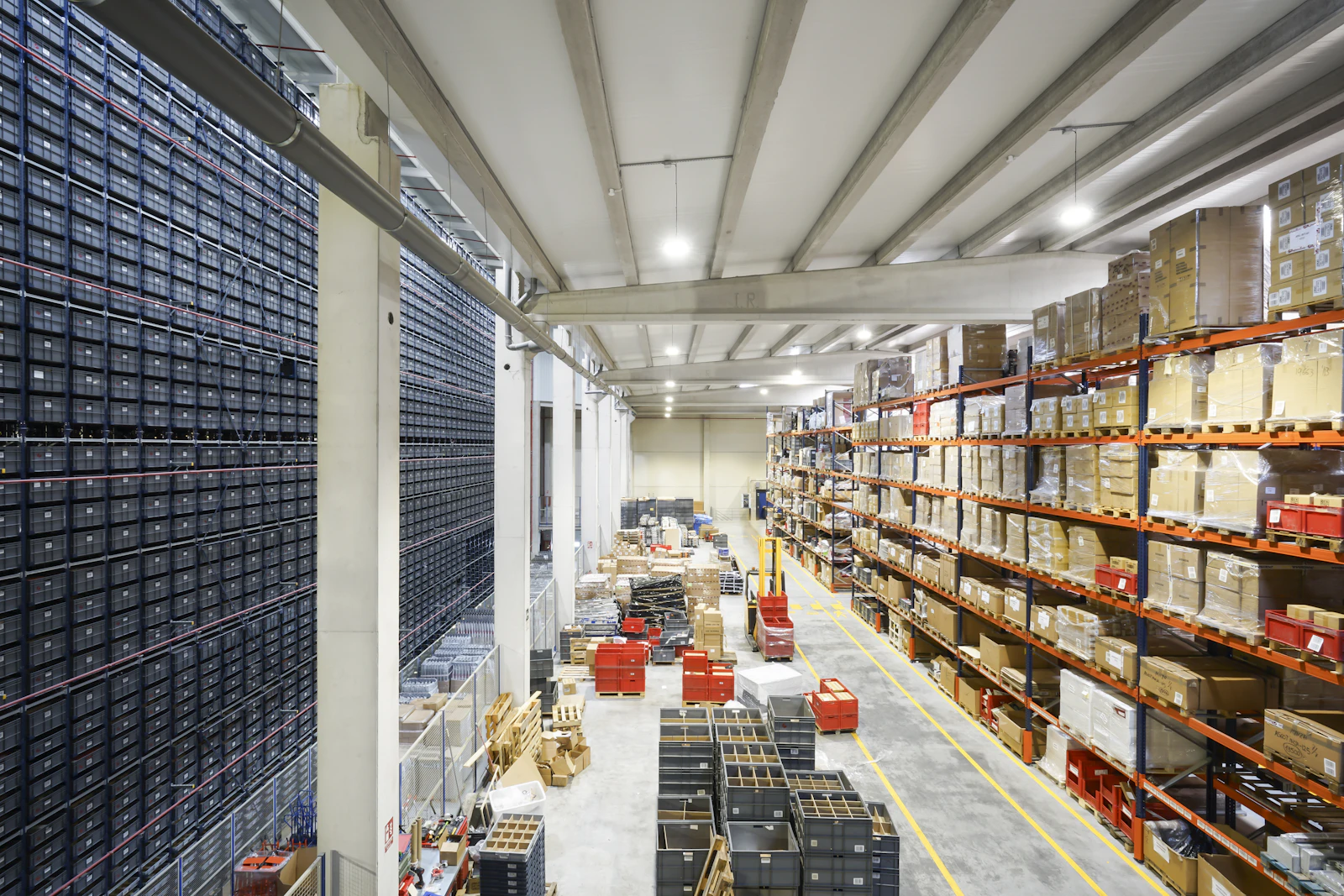
A warehouse aisle running between full-height pallet racking
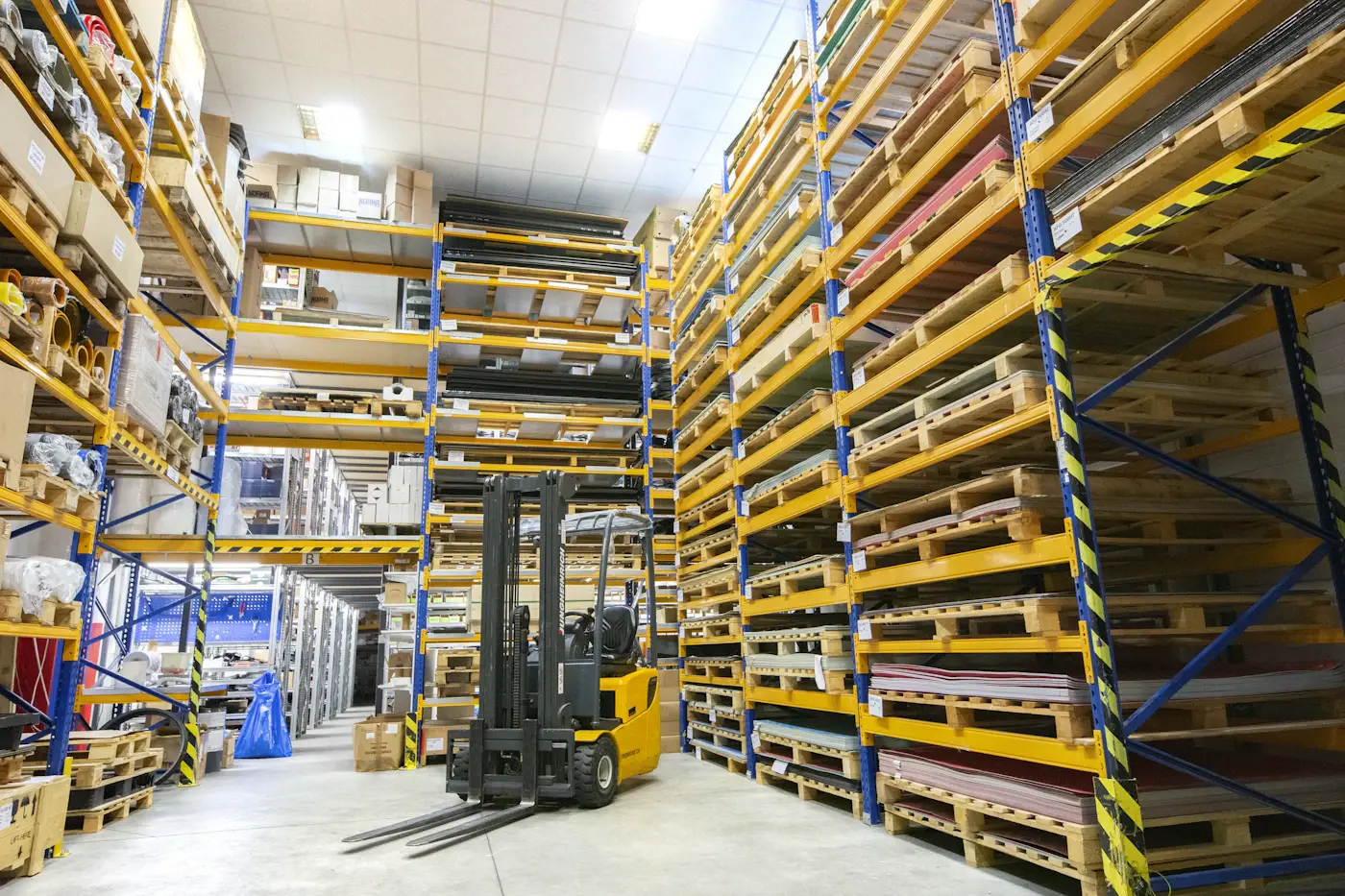
A forklift parked in an aisle of full-height pallet racking

The commercial range

Commercial window films

Heat, cold, safety, privacy, vandalism and the glass you can’t reach are six separate products. A typical building takes two or three of them in different rooms — which is cheaper than putting the expensive one everywhere and still not fixing the lobby.

The blue glass windows of a modern office block seen close up

78% heat · 99% UV

Solar control

Ceramic solar film

Ceramic solar film: most of the sun’s heat turned back at the glass and effectively all of the UV, with your windows still looking like windows. No metal in it, so nothing happens to wifi, door access, alarm sensors or the phone in somebody’s pocket.
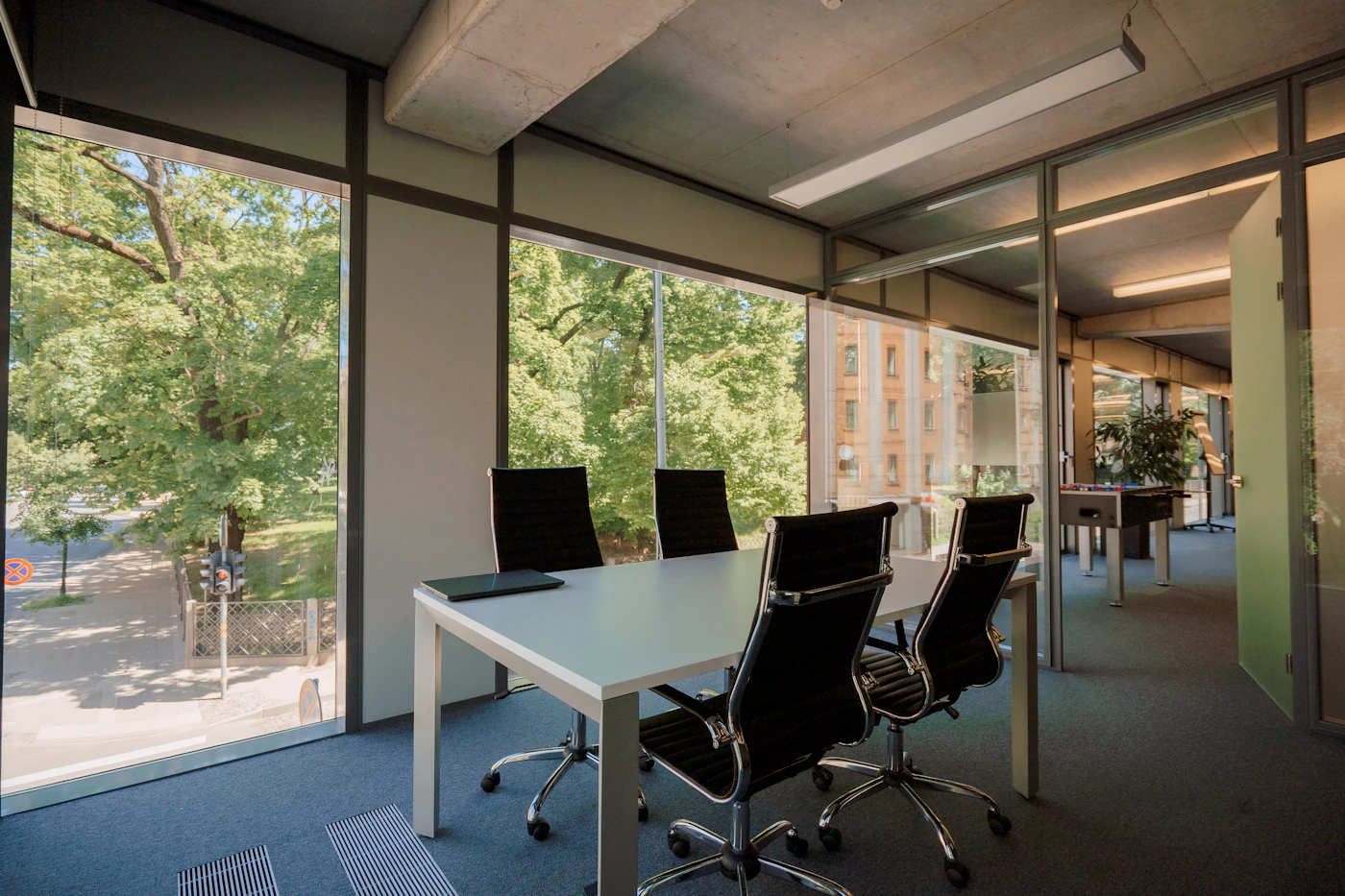
A meeting room in a modern office with a full-height window along one wall

Works in January

Insulating film

Insulating film for cold buildings

A film that bounces your heating back into the room instead of letting single-pane glass throw it at the parking lot. It’s the film for older buildings, historic storefronts and anywhere replacing the windows is either unaffordable or not allowed.

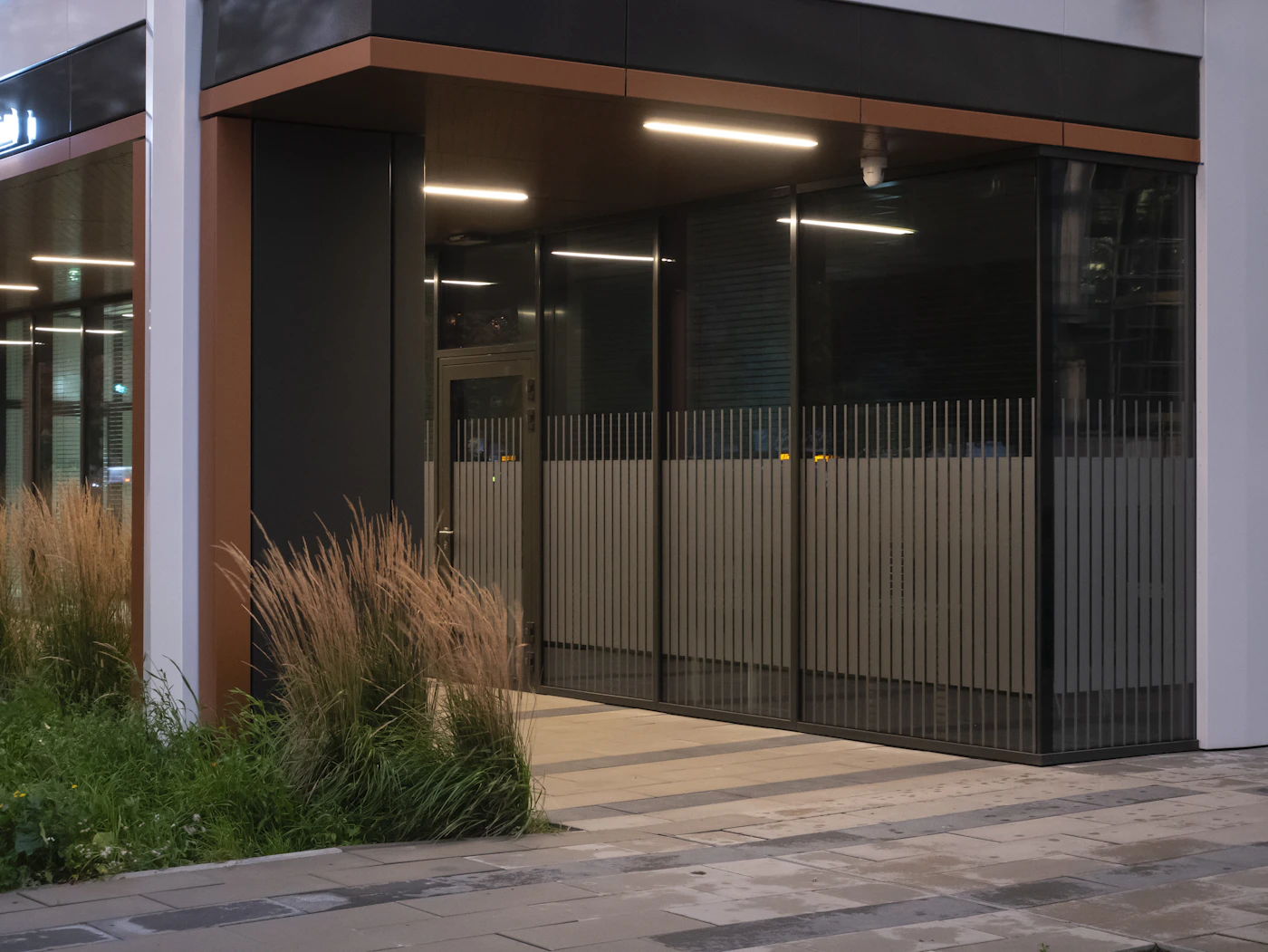
The full-height glass entrance to a modern office building

4–12 mil clear

Safety and security

Safety film

A thick clear layer bonded to the inside of the pane. It doesn’t make a storefront burglar-proof and we won’t tell you it does — what it does is hold a broken pane together, buy minutes on a smash-and-grab, and keep falling glass off a room full of people.

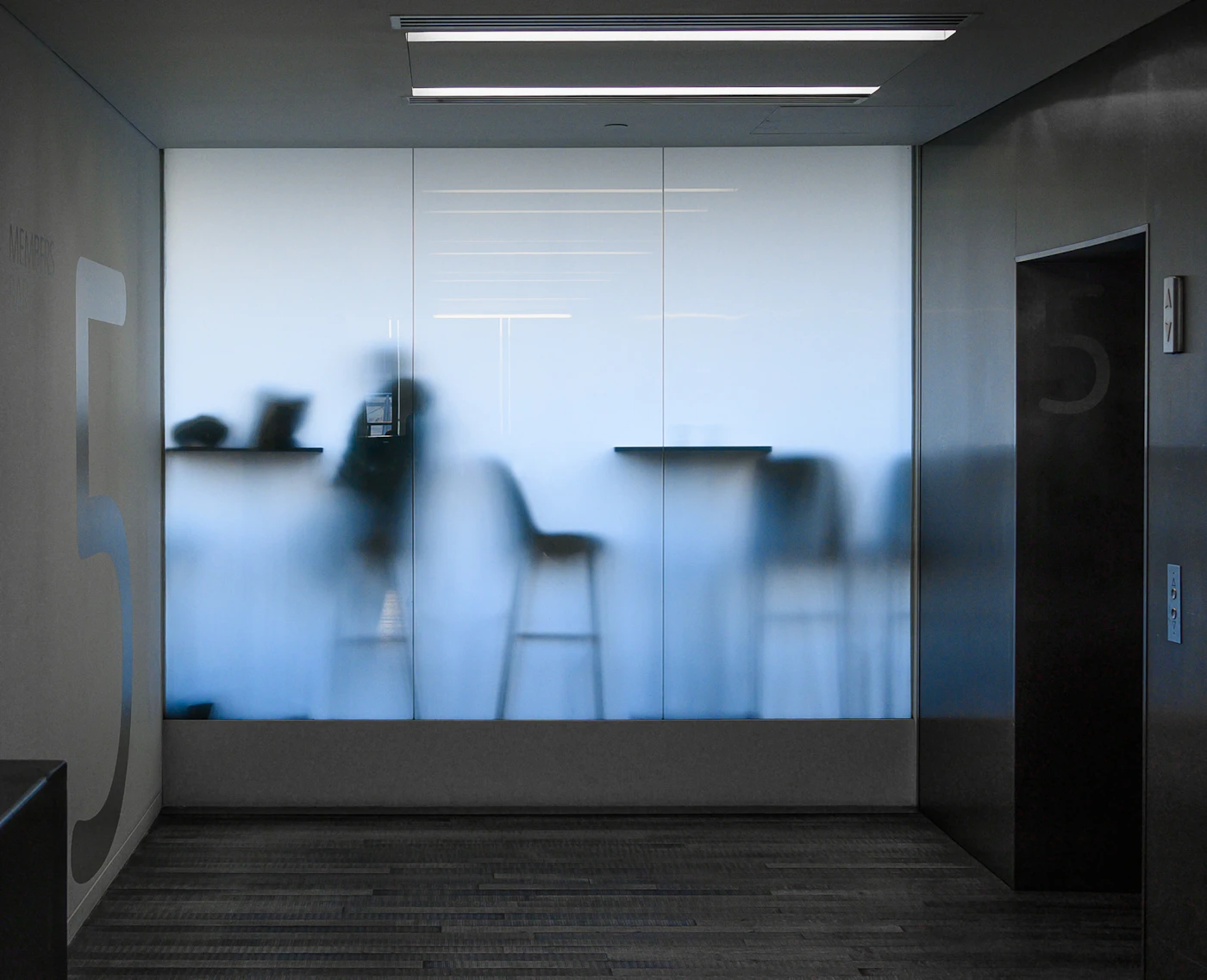
A frosted glass partition with the figures behind it softened to silhouettes

Full pane or banded

Privacy and frosted

Privacy and decorative film

An etched-glass look on the inside of the pane, cut as a full panel or a band at eye level. It gives the room privacy, it stops people walking face-first into full-height glass — and it can carry your own logo cut into the frost.

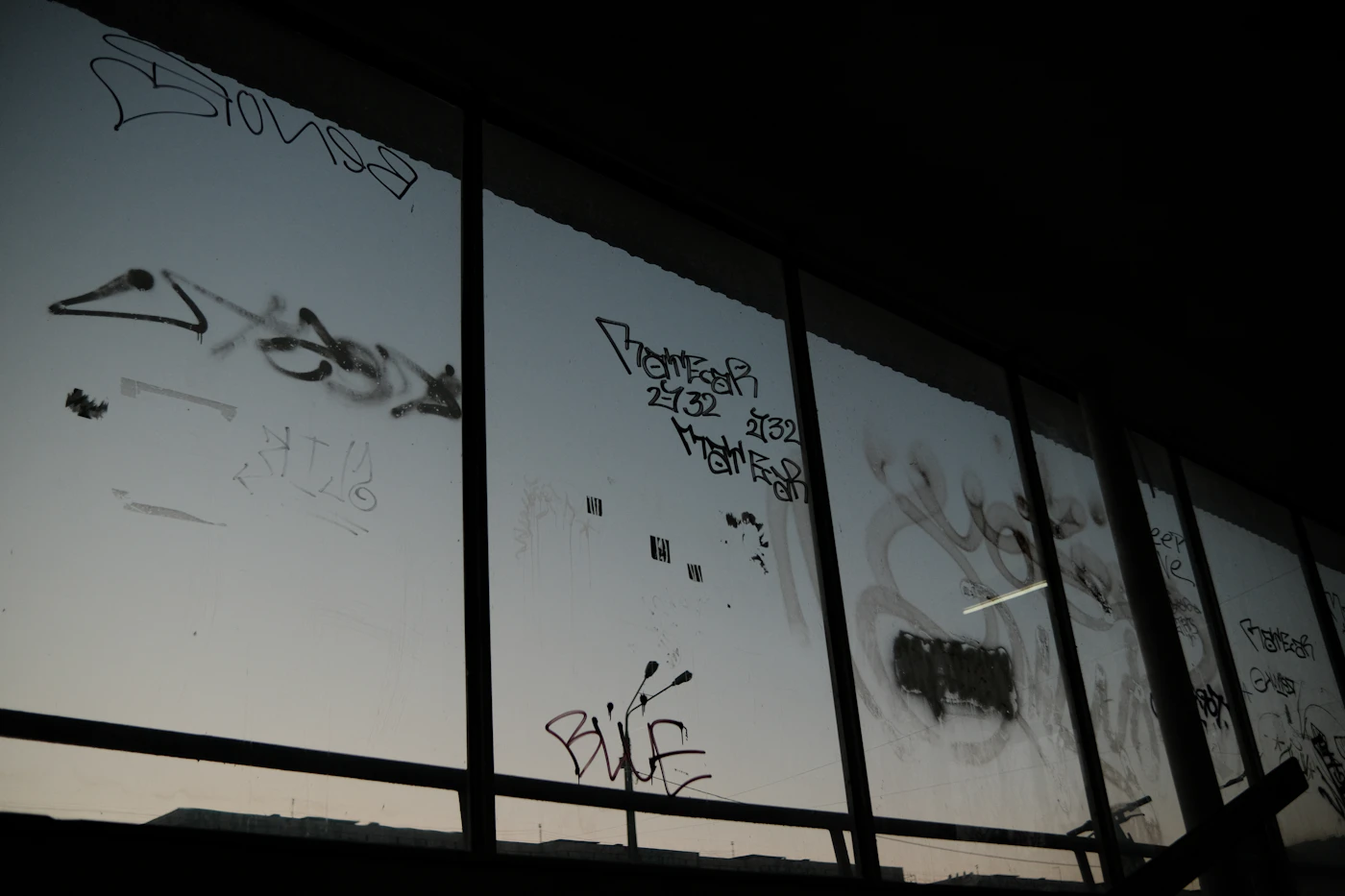
Graffiti tags scrawled across a large pane of street-level glass

Peels off, glass stays

Anti-graffiti

Anti-graffiti film

A clear sacrificial layer over glass, mirrors and elevator panels. Scratches, tags and etching go into the film instead of the glass, and the film peels off in an afternoon. Replacing a storefront pane is a four-figure job with scaffolding; replacing this is a phone call.

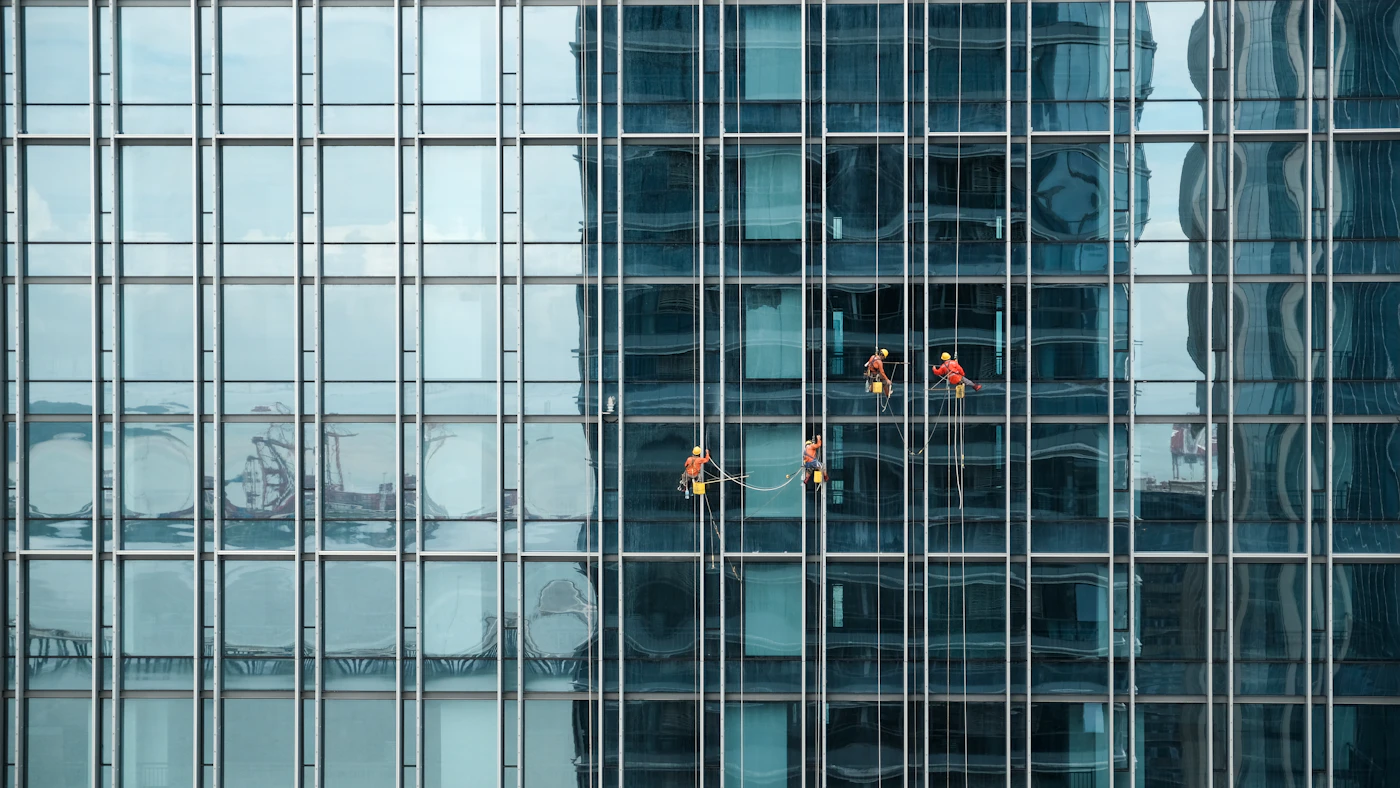
Rope-access technicians working down the glass face of a tower

Outside face

Exterior films

Exterior film

Atriums, skylights, glass towers and anywhere the inside face can’t be reached or is the wrong side to work on. The warranty is shorter than interior film and we’ll say so up front — but it’s the difference between doing the job and not doing it.

Your options

Planning window film for your building

A successful specification starts with how the space is used. Identify the occupied rooms, the uncomfortable glass and the access the installation will need.

A glazed meeting room with solar-control windows overlooking a city skyline
A considered glazing plan for the spaces your team uses.

Occupied workspaces

Map the desks and meeting rooms affected by sun or glare. A targeted plan can address the problem areas without assuming every pane needs the same film.

Share window directions and the hours the rooms are occupied.

Privacy and presentation

Meeting rooms, reception glass and street-facing spaces can need different levels of screening. Discuss full panes, bands and decorative finishes.

Check samples from both sides of the glass.

Access and scheduling

Agree how the installer will reach each pane and which spaces must remain available. Building approvals and suitable working hours belong in the plan.

Confirm the glass specification before ordering film.

Explore the savings

How energy savings can offset the cost

The cost of the installation and the energy it saves both affect payback. Move the glass area to explore an example, then discuss your building, chosen film and a project-specific quote with our team.

Illustrative example in USD — not a quote or a prediction for your building.

Example cooling savings a year
$16,200
Illustrative payback
33 months
Cooling savings over 10 years
$162,000

Example inputs: USD $7.40 per sq ft installed and USD $2.70 per sq ft in annual cooling savings, over 10 years. These fixed assumptions are not this business’s prices or current local energy rates. Actual results depend on the building, climate, energy use and chosen film.

Example payback10-year example

33mo

to pay for itself in this example, then 7 more years of savings.

Example cooling savings over 10 years
$162,000
Work schedule
Agreed for your project
Installation price
Quoted for your building

This model illustrates the relationship between installation cost and cooling savings. Your quote, expected savings and warranty depend on the selected film and your project.

Why choose us

Why choose J’s Tinting Solution

What you get when you book commercial window tinting with us.

Help choosing the right film

We show you film samples on your own glass and explain what each one does for heat, glare, fading and privacy, room by room.

Fitted at your property

We come to your home or building to check the glass, show samples and fit the film.

Union Window Films

We fit Union film, and your quote confirms the film and its warranty.

Fetching live reviews from Google

How a commercial job runs

How a commercial window film job works

Window film is the rare building improvement with no dust, no drilling, no paint and no smell. It goes on the inside of glass you already own, with the fitting planned around how you use the building.

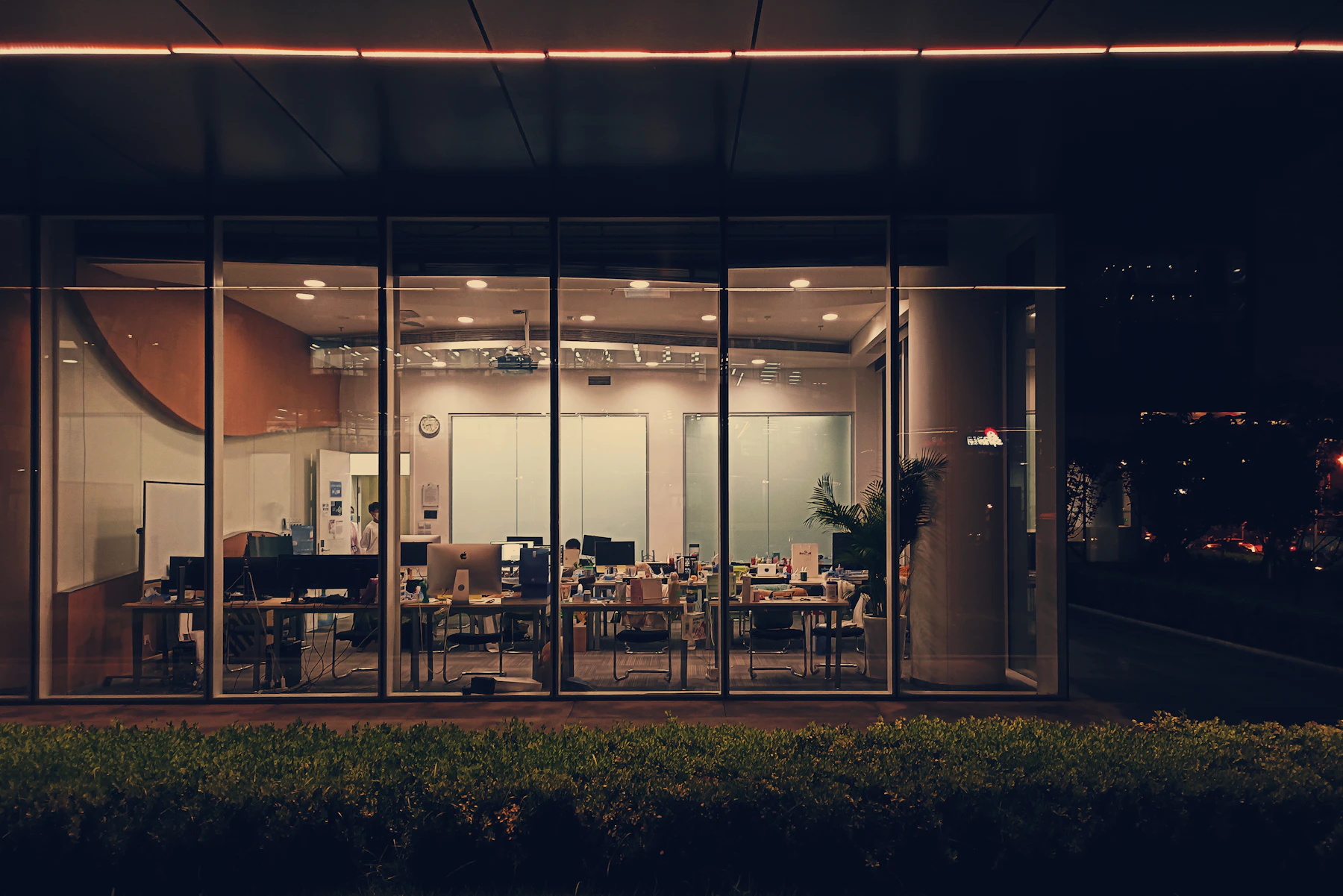
An office still lit behind its window wall long after dark
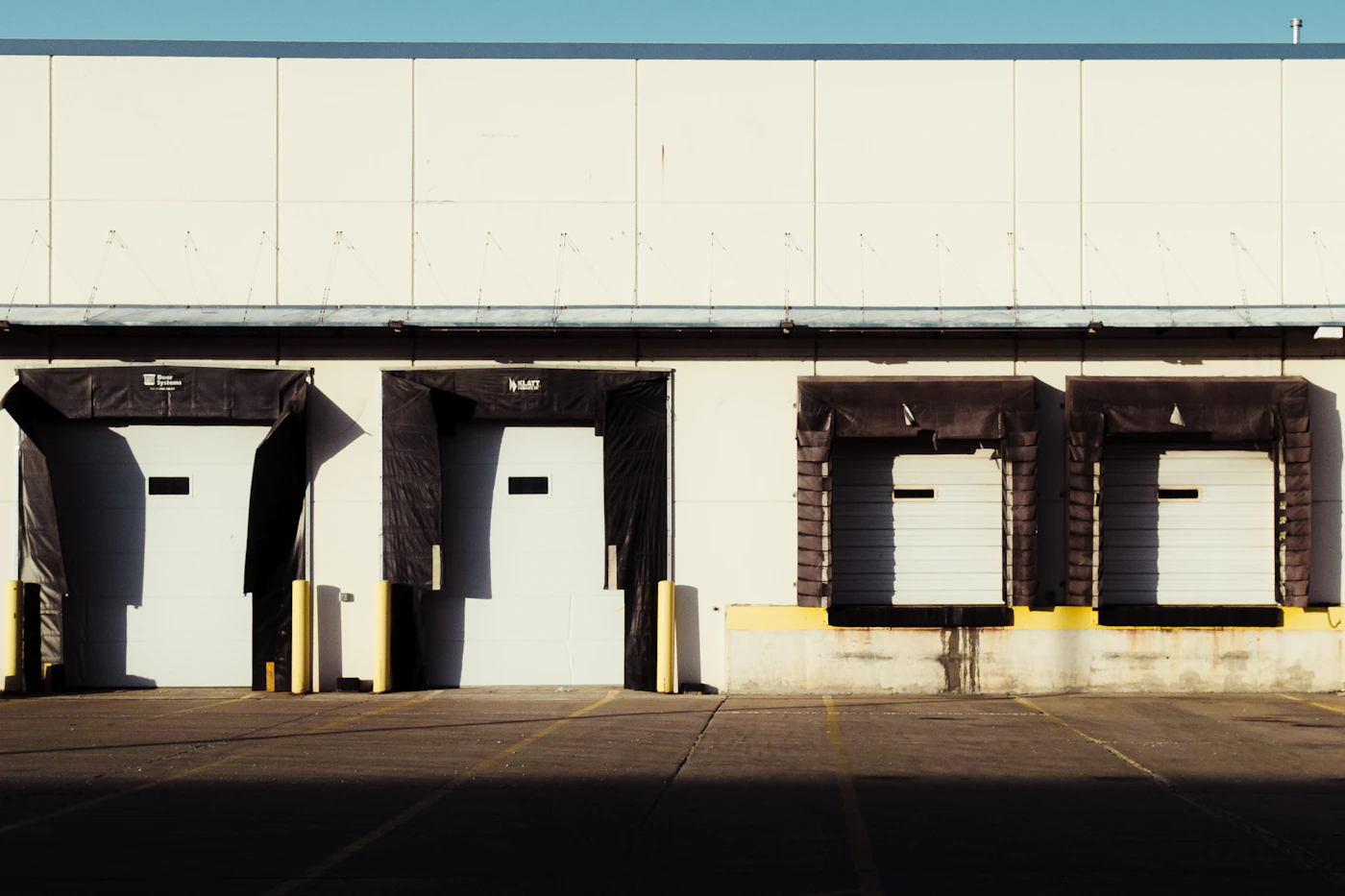
A row of loading dock doors along the side of a distribution unit

We count your glass

Every pane measured, which way it faces noted, and the glass itself identified — double-pane, coated, tempered, laminated, wired. Putting the wrong film on a double-pane window is how glass ends up cracked and a window warranty ends up void, so this happens before anything is priced.

One price for the building

Priced wall by wall, with the windows that don’t need film taken out of the number rather than quietly left in it. North-facing glass, shaded glass and anything already coated usually comes off the list — it’s a shorter quote than most people expect.

We work around your hours

Evenings, weekends or a floor at a time can be talked through when the fitting is planned, with any badges, safety paperwork and access arranged first. Nothing is drilled, nothing is sprayed, and there’s nothing to air out afterwards.

Checked pane by pane

A walk around with whoever runs the building, anything they catch fixed on the spot, and warranty papers issued for the film and for the work. The film looks faintly hazy for a few days while the installation water dries out — that’s meant to happen, and cleaning it early is the one way to spoil it.

0
Days closed for the work
1 floor
A night, typically
10 years
Film and workmanship
30 days
To fully dry

Before you book

Questions about commercial window tinting in Pinellas Park

How much does commercial window tinting cost?

Commercial window film usually costs from $6 to $14 per square foot fitted. The price depends on how much glass there is, the film you choose and how easy the windows are to reach.

Can window tinting be planned around an occupied building?

Yes. We can fit film before or after hours, at weekends or in stages, so the building keeps running.

Does every window need the same film?

No. Each side of a building can have its own film: solar film where the sun hits, privacy film for meeting rooms and safety film where it is needed.

What are the options for meeting-room privacy?

Frosted film, frosted bands or full-height privacy film. You can see samples on your own glass first.

What do you need for a commercial window film quote?

The address, roughly how much glass, which rooms and what you want to fix. Plans or photos help.

Does the tint come with a warranty?

Yes. Union car film comes with Union’s limited lifetime warranty against bubbling, peeling and fading on qualifying installs.

Free quote

Get a commercial window film quote

A few answers are all we need to know roughly what your building needs. Then we’ll check the glass and confirm your quote.

  • The glass is checked before your quote is confirmed.
  • One price for the building, with the glass that doesn’t need film taken out of it.
  • Fitting planned around your working day.
Prefer to talk it through? (727) 637-1404

Price my building

Step 1 of 2

Project goals
Existing film removal

Walkthroughs are booked around your business hours, evenings included. It takes about an hour on a floor, and we follow your building’s rules for access and safety.